Biotic Instruments — Infrastructure

PhytoMat

A consistent reservoir beneath every planting. Plants draw moisture on demand, when they need it — mimicking how most plants drink in nature.

  • Modular 12" × 12" sub-irrigation tiles — connect in any configuration
  • Two modules: Structural (load-bearing, walkable) and Trim-to-Fit (cuttable in-field)
  • Capillary passive distribution — plants draw moisture on demand
  • Compatible with full automation using PhytoSensors or manual fill

12" × 12"

Tile dimensions

405 lbs

Structural max load

200 lbs

Trim-to-Fit max load

Patent Pending

Biotic Instruments

Why PhytoMat

Two configurations,
one system.

A boot stepping on a load-bearing PhytoMat Structural tile

Structural tiles

Designed for load-bearing applications where people need to step, such as large millwork planters or public spaces. Rated to 405 lbs per tile.

Trim-to-Fit PhytoMat tile being cut to fit a curved planter

Trim-to-Fit tiles

Designed for custom geometries and irregular layouts. Cut in the field with a utility knife, shears, or automatic saw to fit curves, corners, L-shapes, or any non-standard shape.

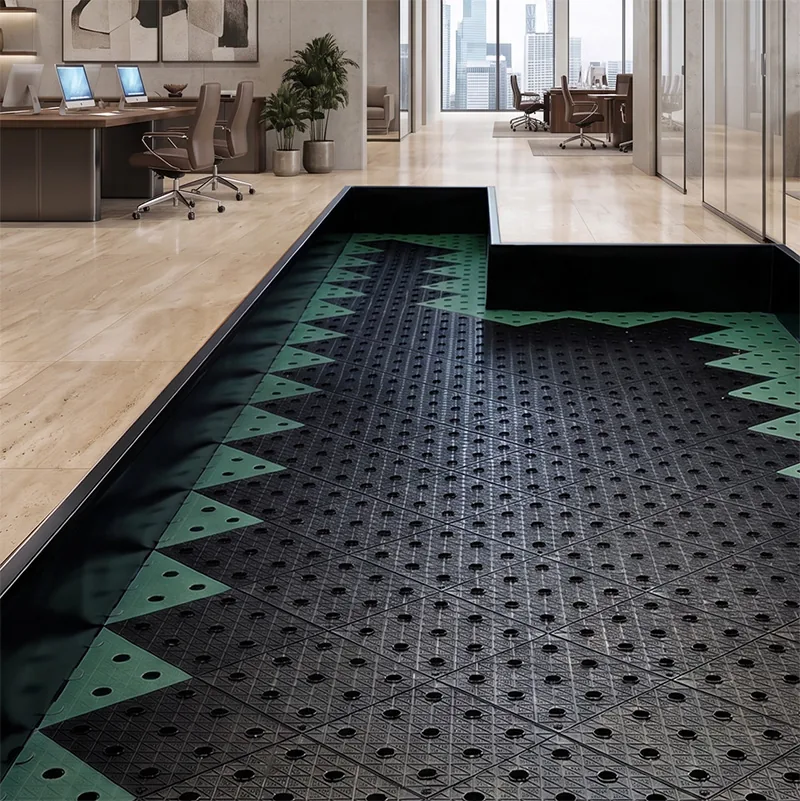
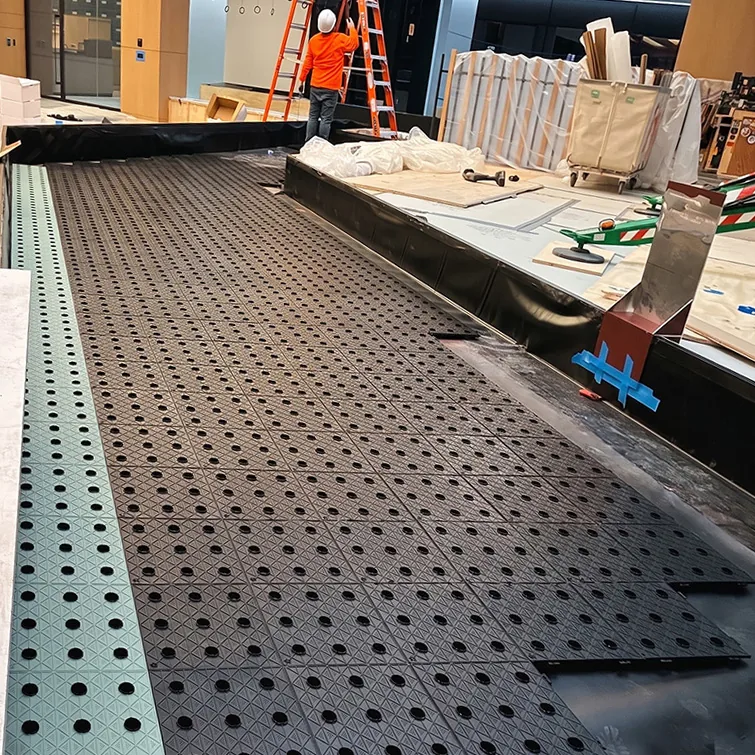
PhytoMat tile grid configuration for a large commercial planting

Modular grid format

Each 12×12 tile connects into a continuous grid to form a unified planting base. Scale from a single window box to a 300 square foot installation without adding complexity.

System Overview

How the PhytoMat
works.

01

Water enters the reservoir

An automated irrigation cycle from the ILCU delivers a precise volume of water into the PhytoMat reservoir — or fill manually. Either way, water enters from above.

02

Capillary action distributes it evenly

Water disperses uniformly beneath the planting zone, making moisture accessible across the entire planting area without further manual adjustment.

03

Roots draw exactly what they need

Wicking substrate helps transition moisture into the root zone. Plants draw what they need through capillary action — pulling water from beneath the root zone when they need it.

PhytoMat cross-section showing plant, soil, root system, wicking medium, and water reservoir
Biotic OS app interface

Digital Ecosystem

Controlled by
Biotic OS.

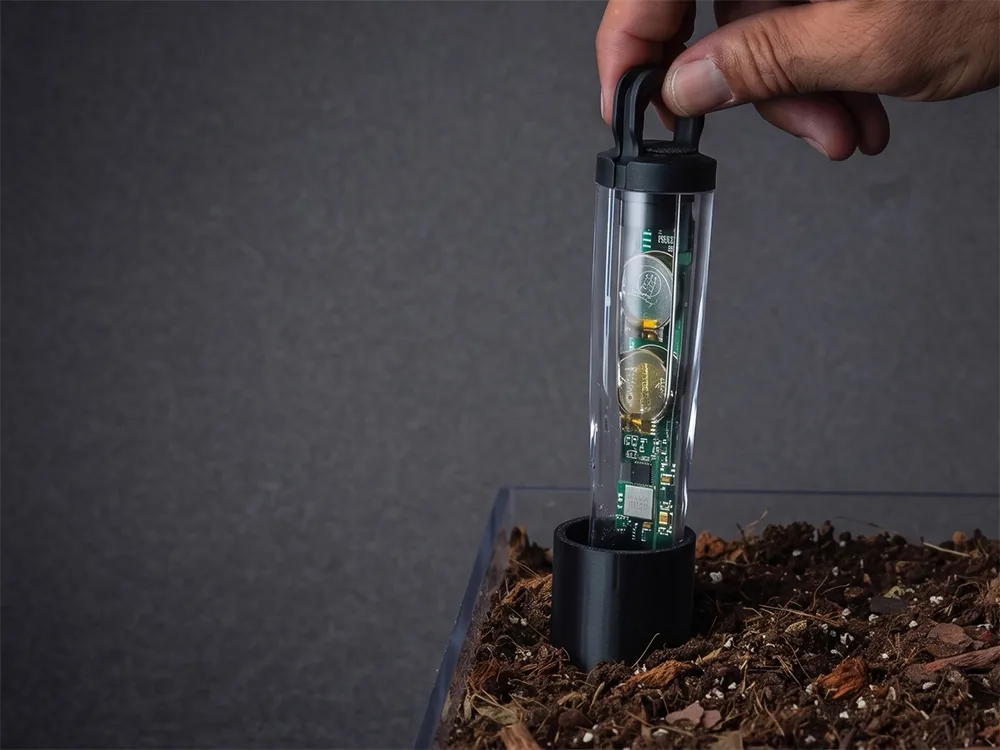
When paired with a PhytoSensor, the system takes care of watering itself. Tell Biotic OS what plants you're growing and it determines the right irrigation schedule automatically. Available for Apple iOS and Google Android.

  • Full control over irrigation and lighting functionality.
  • Activity log to track water and light cycles over time.
  • Groups function for organizing units across large commercial sites.
  • Alerts for sensor events, empty tanks, and network disconnection.
  • Notes and photo feature to track maintenance across multiple devices.
  • WiFi cloud connectivity or local access via Bluetooth mode.
ZeroManual watering

Tell Biotic OS what plants you're growing. The PhytoSensor reads the reservoir. The system figures out when to irrigate. No schedules to set, no guesswork.

Any sizeInstallation scale

Tile the PhytoMats across a 2-square-foot windowsill or a 400-square-foot lobby planting. No special configuration required at any scale.

↑ Plant healthRoot zone consistency

Capillary distribution ensures moisture is always accessible across the planting area. Each plant draws according to its own needs — mixed plantings thrive together without individual attention.

Plant roots absorbing moisture — representing capillary action in the PhytoMat substrate

PhytoSensor Integration

Fully
automated.

PhytoMat reduces the maintenance burden — moisture is always available in the reservoir. Add a PhytoSensor and Biotic OS handles the rest: tell the app what plants you're growing, and it determines when to water them.

Learn about PhytoSensor

Ideal Environments

Built for the
commercial environment.

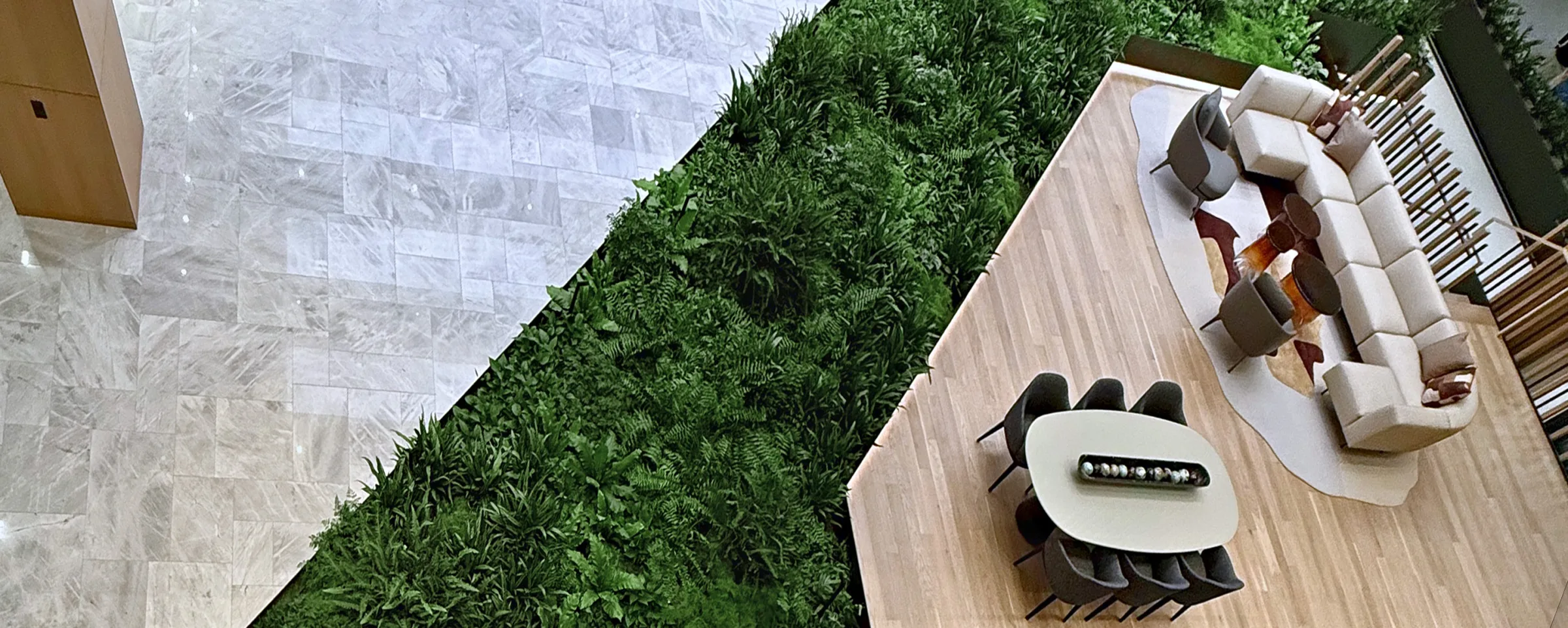
Corporate Offices

Reception areas, open-plan floors, and executive corridors — maintained automatically with no ongoing staff intervention.

Hotel Lobbies

High-traffic hospitality environments where greenery must look its best year-round with minimal housekeeping involvement.

Restaurants & Dining

Dining rooms, bars, and private event spaces where lush plantings enhance atmosphere without the maintenance overhead.

Retail Flagships

Brand environments where living plant installations reinforce premium positioning and create memorable in-store experiences.

Building Atriums

Large-scale atrium plantings across multiple levels, managed from a single Biotic OS account by facilities teams.

Luxury Residential

High-end residential lobbies, penthouses, and common areas maintained by building staff or interiorscaping partners.

Healthcare Facilities

Waiting rooms and patient corridors where biophilic design improves experience and air quality without burdening staff.

Universities & Campuses

Academic buildings and student commons where self-sustaining plantings reduce facilities team workload across large footprints.

Airport & Transit

High-footfall terminal environments where Structural tiles support large-format walkable installations with zero active maintenance.

Planning Tools

Plan your
installation.

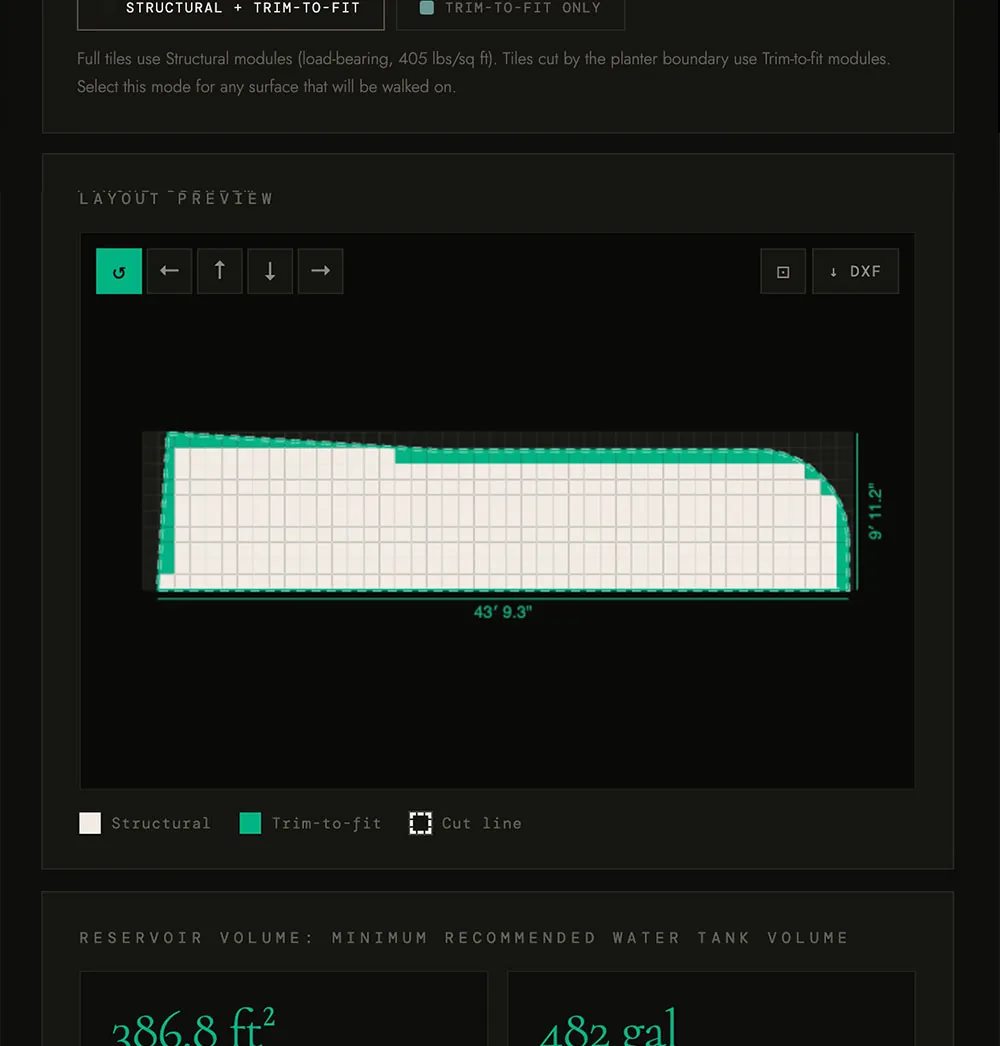
Import your planter drawing as a DXF or SVG and the estimator calculates exactly how many Structural and Trim-to-Fit tiles you need — with a full component list and DXF export for fabrication.

Open Tile Estimator
Plant roots absorbing moisture — representing capillary action in the PhytoMat substrate

Physical Build

Precision-engineered
to fit anywhere.

Tile Dimensions12" × 12" (305 × 305mm)
With Connectors12.375" × 12.375" (315 × 315mm)
Assembled Thickness1.25" (31mm)
Max Load — Structural405 lbs per tile
Max Load — Trim-to-Fit200 lbs per tile
Recommended Soil Depth4" – 18" (101 – 457mm)
Water DistributionCapillary passive dispersion
Field ModificationTrim-to-Fit: utility knife, shears, or saw
Container RequirementSealed, watertight planter with a level interior surface

System Requirements

  • Must be installed on a level surface inside a sealed, watertight container
  • Requires a wicking substrate — Vulkaponic or LECA recommended
  • Compatible with automated ILCU irrigation or manual fill
  • Designed for integration with Biotic Instruments sensor and ILCU devices

Status

Patent Pending

Kynes Biotic Instruments, Inc. — bioticinstruments.com

Downloads for Professionals

Technical specifications and installation guidance for your project.

PDF

Product Sheet

Dimensions, system requirements, substrate specifications, and ordering information.

Download
PDF

Installation Guide

Step-by-step substrate setup, irrigation connection, and field-cut instructions.

Download

Technical Specifications

The full
datasheet.

Dimensions

Base Tile12" × 12" (305 × 305mm)
With Connectors12.375" × 12.375" (315 × 315mm)
Thickness1.25" (31mm) assembled
Soil Depth Range4" – 18" (101 – 457mm) above mat
Max Load — Structural405 lbs per tile
Max Load — Trim-to-Fit200 lbs per tile

Water Distribution

MethodCapillary passive dispersion
Power RequiredNone
Moving PartsNone
IndicatorVisual water level indicator
Fill MethodManual or automated ILCU
ContainerSealed, watertight required

Compatibility & Build

ConfigurationsStructural · Trim-to-Fit
Structural UseLoad-bearing, walkable surfaces
Trim-to-Fit UseCustom geometries, irregular layouts
Field CuttingUtility knife, shears, or saw (Trim-to-Fit only)
SubstrateVulkaponic or LECA (required)
IrrigationAutomated ILCU or manual fill
Sensor ReadyBiotic Instruments sensor compatible
IP StatusPatent pending

Start a project

Ready to spec PhytoMat
for your installation?

Or email us directly at info@bioticinstruments.com