Installation & Design
Plant Design & Installation
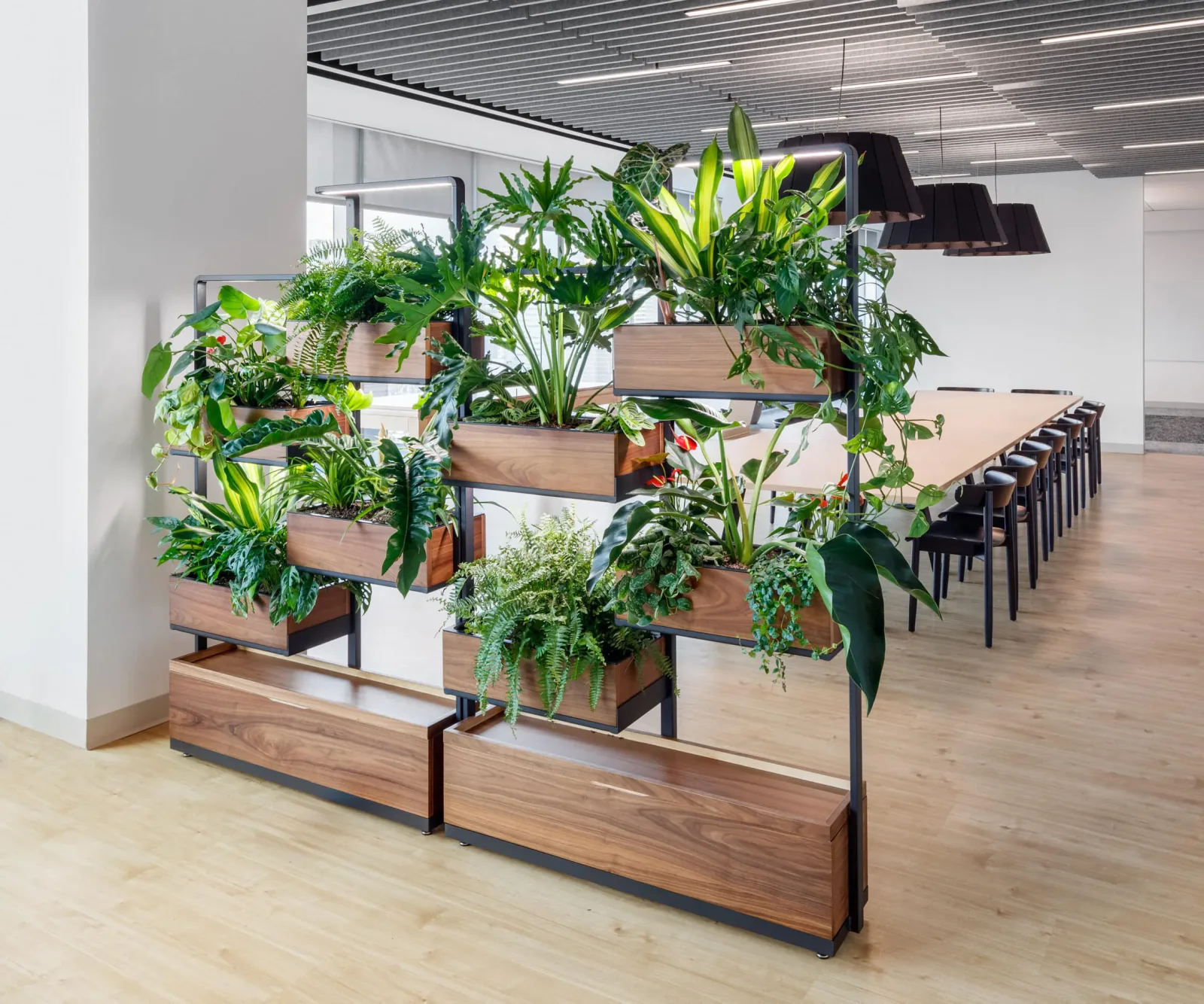
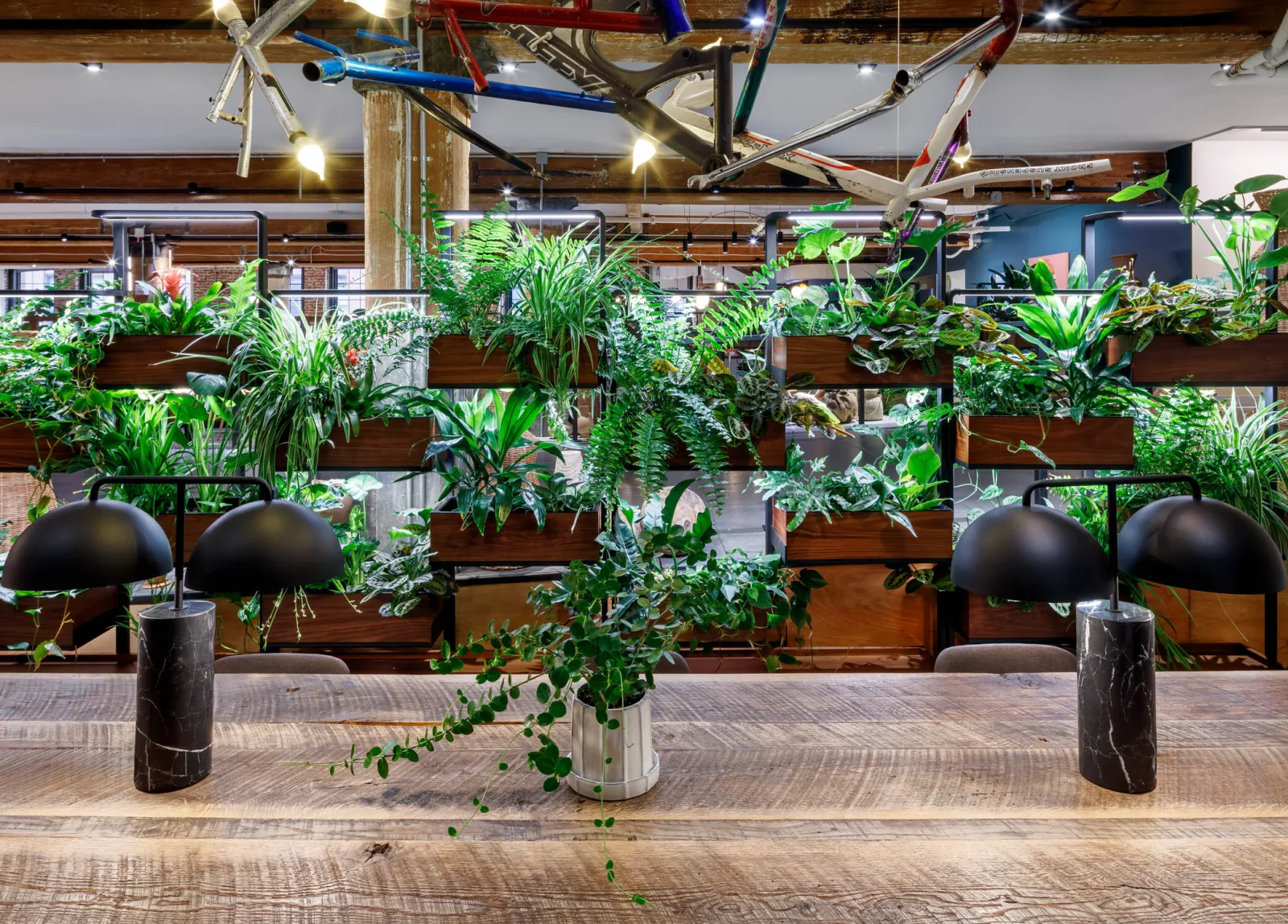
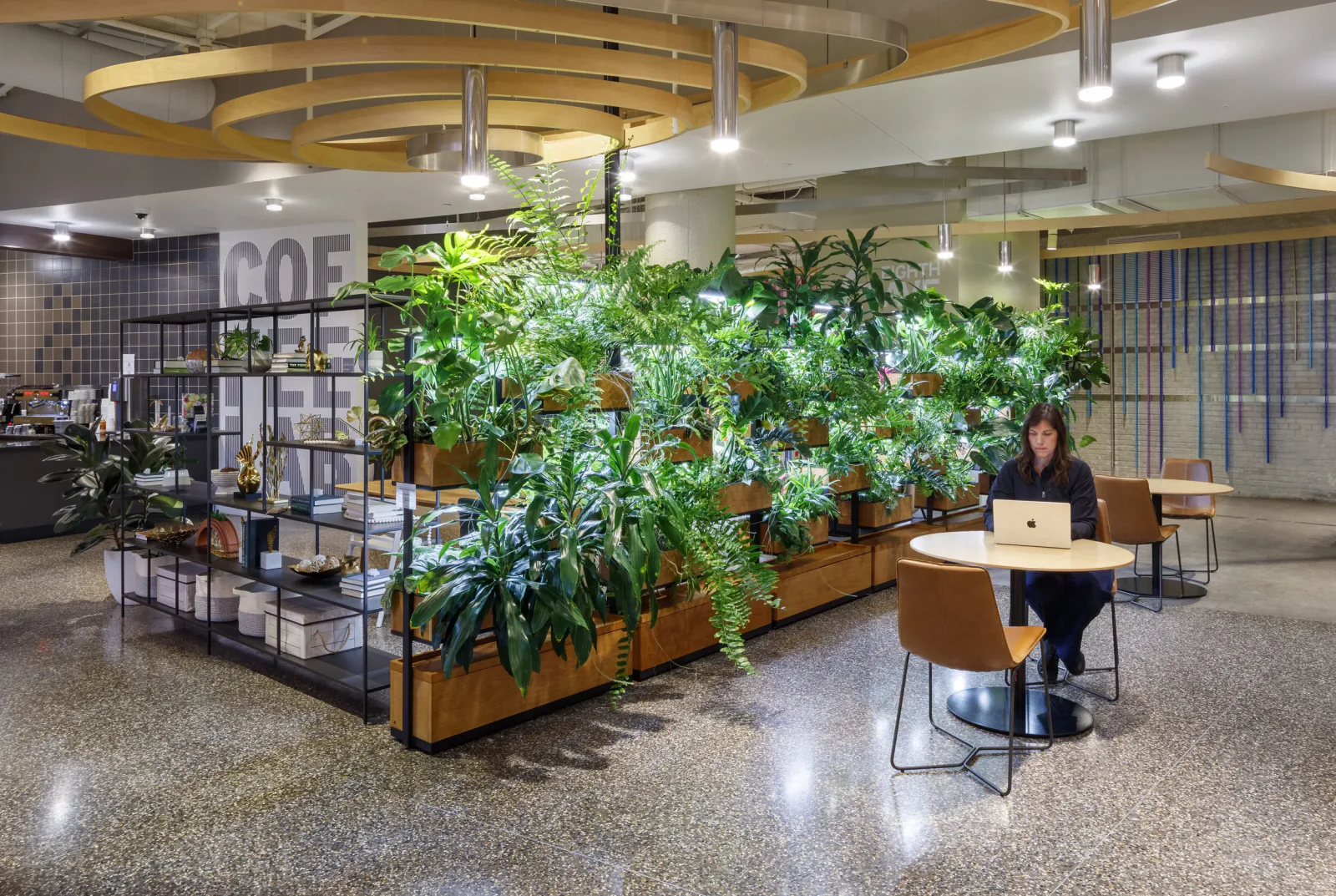
A successful Green Divider display combines thoughtful plant pairing with strong visual composition. By selecting species with similar moisture needs and arranging them to spill over and fill the boxes, you can create a lush, dynamic installation that thrives under the system's automated irrigation.
Plant Design
Compatibility
The first thing to consider when selecting plants is how well different types can live together. Plants from different environments most often can't cohabitate: succulents, which inhabit arid regions, shouldn't share a box with ferns, which require abundant humidity to survive.
The Green Divider offers independently customizable irrigation timers for each box. A box of ferns preferring modest daily watering can be managed separately from a box of aroids that prefer their soil to dry out between waterings.
Aesthetics
The Green Divider always looks best with plants "spilling" out of the boxes, covering not just the edges but extruding up and out. Select at least one or two plants per divider that are bigger than the box for maximum impact.
Aim to fill the vertical height of the boxes completely, either with one large central plant or multiple taller plants. Always include at least one trailing or hanging-basket plant to fill space and cover as much of the wood finish as possible.
Keep in mind which side of the unit will be the "front" and angle plants toward their intended audience. If the divider is free-standing and exposed on both sides, consider how the planting will appear from each direction.
Work primarily with 6" and 8" nursery pots. If you use only 6" pots, plants will likely take upwards of a year to fill out even with regular fertilizing. 4" pots are usable but can be outcompeted by their larger neighbors. For certain shallow-rooted plants like Dracaena, 10" pots may fit as well.
Recommended Plants
Because the Green Divider can water plants automatically on a daily basis, the palette of available plants is much wider than in a typical installation where care is administered once a week. Plants don't like to be stressed, and a little water every day is usually preferable to extended dry periods. The following have performed well in the system:
Pothos
The standard "easy plant": aggressive growers that handle stress well. Typically used as underplanting to spill over the sides of the boxes.
Scindapsus
Also known as "Satin Pothos," Scindapsus are closely related to Pothos with unique leaf patterning. Generally slightly more resistant to pests.
Dracaena
Prefers soil slightly on the drier side. Shallow root systems make planting in the Green Divider easy. A good choice for a large plant that spills out of the boxes.
Calathea
Beautiful foliar patterns and capable of growing extremely large leaves in the right conditions. They have a reputation for being difficult because they don't respond well to stress. With consistent moisture, we've had great success.
Philodendron
A large family with diverse leaf morphologies capable of huge, impressive displays. Leaves will often fold toward the grow light bars over time; stake them to redirect growth.
Monstera
Includes the Monstera deliciosa (Swiss Cheese Plant) and hanging varieties like M. adansonii. Naturally climbing plants that may shoot out aerial roots that hang down the side, or climb up the frame.
Ferns
Need consistent moisture, which makes them difficult indoors, but the Green Divider makes ferns easy to maintain. Recommend a low dose of water six days a week and regular fertilizing for maximum impact.
Bromeliads
A fantastic choice for a pop of color. Flowers will eventually die (we've kept them as long as 8 months in the Green Divider) but if fertilized properly will produce "pups", new offshoots that will flower again.
Hoyas
Fairly pest-resistant. Thick waxy leaves come in a wide variety of morphologies. Slow-growing but capable of beautiful growth over time.
Rhipsalis
An epiphytic cactus that does well in the Green Divider thanks to consistent moisture and consistent lighting.
Creeping Fig
AKA Ficus pumila. Can cover the boxes with its tendrils and, when trained, can create truly impressive growth patterns.
Alocasia
AKA Elephant Ears. Highly phototropic: in rooms with little or no natural light, they tend to curve toward the grow light bars, which is ultimately unaesthetic. Not recommended in low-light spaces.
This list is a guide, not a limit. Virtually any plant commonly labelled "Houseplant" can be used. Try things out and see how they do.
Planting the Boxes
There are two recommended methods for installing plants in the Green Divider:
Nursery Pots
Recommended for beginners
Easy plant swaps. If one plant begins to falter, you can swap it out without disturbing the rest.
Visible water level. Since no additional soil is used, you can see directly to the base of the planter insert and adjust irrigation if water pools.
Fixable overwatering. The planter insert can be removed and drained if too much water builds up.
Direct Planting
Better long-term results
Better-looking plants. Roots spread more freely; additional soil mass equalizes moisture and supports more substantial growth over time.
Less maintenance long-term. Once established, the soil mass acts as a moisture retention layer, reducing the margin for error.
Harder to detect overwatering. With the box fully planted, there's no direct view of the water level at the base. Monitor moisture carefully.
Harder to drain excess water. Planter inserts are much heavier when soil-saturated, making overwatering mistakes more difficult to correct.
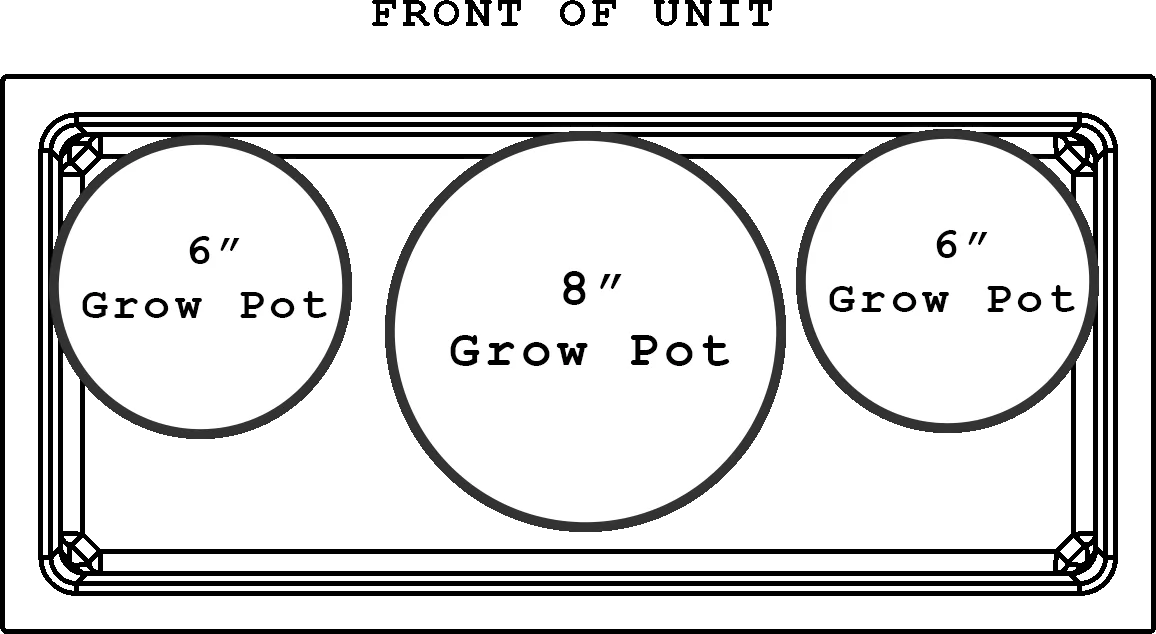
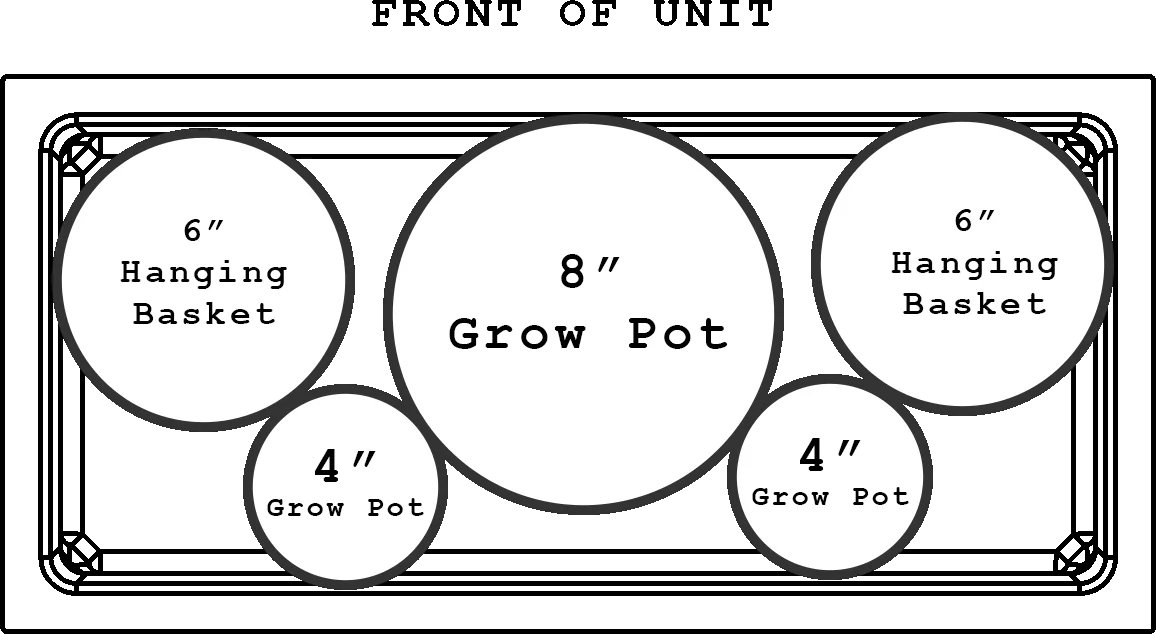
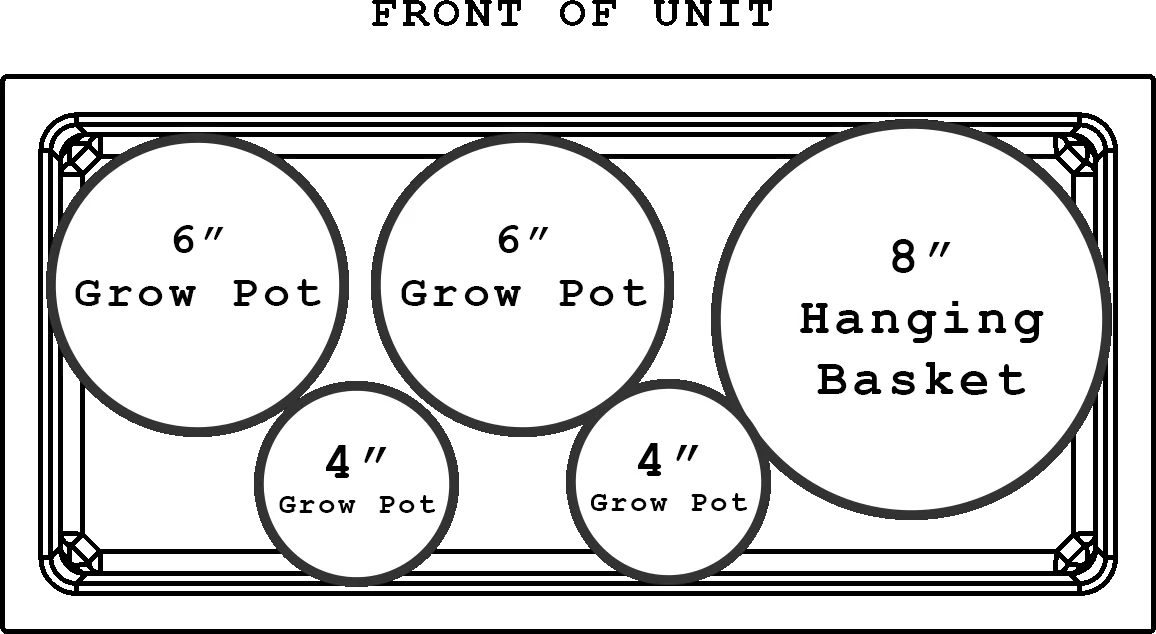
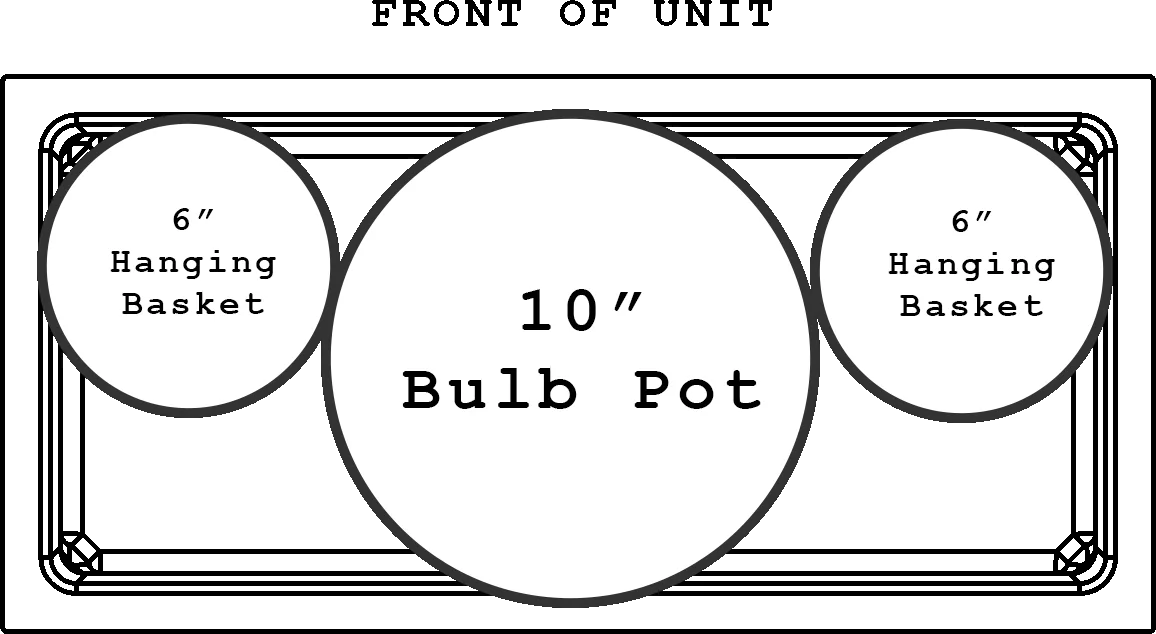
Pot configuration examples
Installing Nursery Pots
Use pots no taller than 6"; taller pots will peek over the box edge. Azalea pots, bulb pots, and mum pots are all shorter-profile and work well.
Drainage holes must be at the very bottom of the pot. Certain nursery pots (especially hanging basket types) have drainage holes raised from the base and won't receive water from the system.
Use multiple sizes of pots, and the largest you can fit, for the best visual effect. Mum pots can accommodate a 10" shallow-rooted plant like a Dracaena.
Soil quality matters. Avoid coco-coir-heavy soils (poor moisture retention) and espoma (retains too much). For ferns, choose a soil that retains moisture for multiple days. When repotting, Fox Farm Ocean Forest is recommended.
After placing plants, run the system for approximately 10 minutes to fully saturate the soil.
Planting Directly into the Boxes
Direct planting always requires a layer of expanded clay aggregate (LECA) at the base for drainage. If using smaller plants (4" nursery pots), ensure the root mass is positioned to receive enough moisture from the sub-irrigation zone.
Placement
The Green Divider is designed to work without natural light. The built-in grow lighting provides sufficient spectrum for long-term plant health in fully interior spaces.
If placed far from windows, irrigation settings typically only need seasonal adjustment: when the AC comes on in the spring or the heat comes on in the fall. If the unit is receiving significant natural light, water needs will shift more noticeably throughout the year as the sun's intensity fluctuates.
Lighting & Leveling
Lighting
The built-in grow lights emit full-spectrum light at approximately 300 foot-candles at the foliar level, sufficient for the long-term health and growth of plants even without windows. Set your light schedule to 12–14 hours per day via the app timer.
Plant foliage tends to turn toward light sources. Without external lighting, certain plants will reach toward the grow light bars, which can leave burn marks on leaves touching the bars for extended periods. Prune the affected leaves or stake them out of the way; Philodendrons in particular are prone to this.
Leveling
All four boxes must be perfectly level. If they are not, water will pool on one side of the planting tray, starving plants on the opposite side over time. Use a spirit level during final placement and adjust the furniture feet or casters as needed.
Leveling is one of the most common causes of irrigation problems. Take extra time on this step.